3 Yoga Poses to Improve Balance and Posture
A Somatic, Nervous-System Friendly Approach
The good news: yoga can support quality of life, physical confidence, and overall wellbeing — especially when it’s practiced in a way that feels safe, steady, and sustainable.
As we age (or after stress, illness, injury, or big life changes), we may notice balance feels less reliable, posture collapses more easily, or certain muscles feel weaker or tighter. Often, this isn’t just a “strength issue” — it’s also a nervous-system issue. When the body doesn’t feel settled, we tend to brace, hold our breath, and move with less ease.
That’s why I’m sharing three simple, grounding postures that support balance and posture while also calming the nervous system. They’re gentle, practical, and easy to practice at home with no special equipment.
Powerful Benefits of Yoga for Balance and Posture
Improves balance: Supports steadier footing and can reduce the fear of falling.
Builds functional strength: Strong legs support stability. A supported upper body helps posture and may ease neck/shoulder stiffness.
Re-aligns posture (without forcing it): Releases tight areas, improves mobility, and encourages a more natural upright alignment.
Supports nervous-system regulation: Slow movement + breath awareness can reduce tension and help the body feel safer.
Builds confidence and body trust: Over time, you’re not just “doing poses” — you’re rebuilding a connection with your body.
3 Yoga Poses to Safely Practice at Home
These practices focus on strengthening, stabilizing, and improving coordination. The balancing elements also cultivate mindfulness and inner steadiness.
Trauma-informed note: treat everything here as an invitation, not a command. Move slowly. If you notice dizziness, overwhelm, numbness, or a “shut down” feeling — pause, place a hand on your chest or belly, feel your feet, and return to a simple breath. Less is often more.
Precautions: These practices are generally safe for most people, but please consult your health care practitioner or a qualified yoga therapist—especially if you’re new to yoga or managing a health condition.
1) Supported Mini Chair Pose (Utkatasana variation)
(This is the “easy squat” style movement — small range, steady and controlled.)
Benefits: Strengthens thighs, hips, knees, ankles, and the muscles that support posture.
Precautions: Take care with knee sensitivity. Use a smaller bend or hold a chair for support. Stop if pain arises.
How to practice:
Stand with feet hip-width (or a little wider if that feels better).
Soften the knees and let your arms hang comfortably (or hold a chair/bench).
Exhale: bend the knees slowly, lowering the hips just a little (even 5–10 cm is plenty).
Inhale: press through the feet to return to standing.
Repeat 5 slow rounds, moving like you’re in honey.
Somatic tip: feel the whole foot on the floor — heel, ball of the foot, and toes. Let your exhale be a little longer than your inhale.
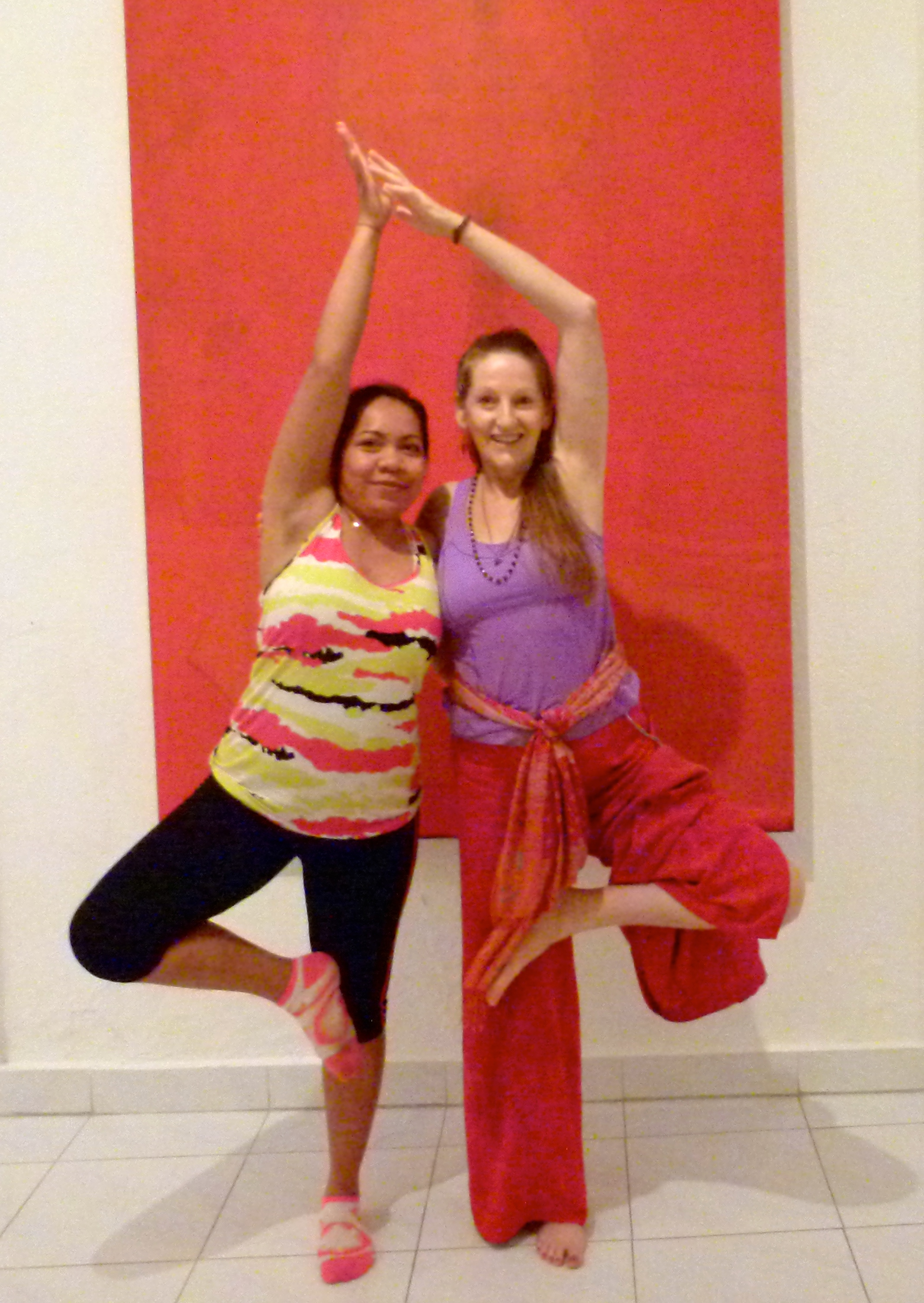
2) Tree Pose (Eka Pada Pranamasana / Vrksasana)
Benefits: Strengthens legs, ankles, and feet; improves balance, focus, and steady posture.
Precautions: Practice near a wall or stable support. If you feel wobbly, that’s normal — use support and keep it friendly.
How to practice:
Stand tall and gaze at a spot in front of you. Soften the muscles around your eyes and jaw.
Shift weight into the left foot and feel the leg gently active.
Place the right foot on the inner calf (or inner thigh if appropriate). Avoid pressing into the knee.
Bring hands to heart (prayer), or extend arms out slightly like “wings” for balance.
Breathe slowly and hold for 3–6 breaths.
Repeat on the other side, up to 3 rounds.
Variation: When steady, raise the arms overhead in prayer.
Somatic tip: instead of “trying to balance,” focus on feeling supported — imagine the ground gently holding you up.
3) Standing Bow-and-Arrow (Somatic Archer variation)
Benefits: Opens the chest, strengthens upper back/shoulders, reduces neck/shoulder tension, and supports upright posture.
Precautions: Stop or modify if pain arises. Keep shoulders relaxed and movements smooth.
How to practice:
Stand with feet shoulder-width apart. Step the right foot slightly forward.
Raise your right hand in front of you (like holding a bow).
Bring the left hand near the right (like holding the string).
Inhale: slowly draw the left elbow back (as if pulling an arrow to the ear). Keep shoulders down and neck long.
Exhale: release gently, returning to center and softening the jaw and neck.
Practice up to 8–10 times each side.
Somatic tip: after each “release,” pause for one breath and notice: Do I feel more open? More grounded? If yes, continue. If no, make it smaller.
Want to Go Deeper?
If you’d like personalized guidance — especially if your body holds tension from stress, overwhelm, or past experiences — feel free to get in touch with Kate-Nirlipta.
If you’re exploring this more deeply, my work in somatic yoga and trauma release focuses on helping you build body safety, strengthen self-regulation skills, and create a home practice that actually feels doable.
References and Further Reading
Asana Pranayama Mudra Bandha, Yoga Publications Trust, Munger, India (4th Revised Edition, 2008)
Yoga International: Yoga Therapy and Wellbeing
Yoga Journal: Yoga for Everyday Vitality